Dropshipping Beginners Complete Guide 2026: Expert Tips
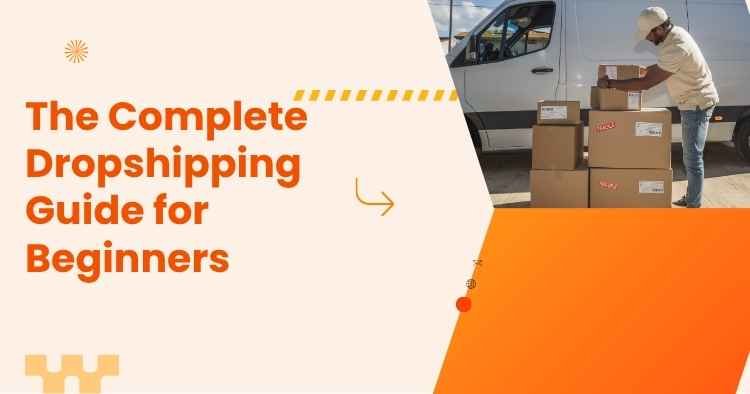
Dropshipping is a retail model where you sell products online without holding inventory — a customer buys from your store, your supplier ships directly to them, and you keep the margin. To start, pick a niche, choose a supplier (Shopify Collective, CJdropshipping, or Zendrop), build a Shopify or WooCommerce store, register the business, and run ads. Startup cost runs $500 to $1,000, and most beginners take three to six months to reach consistent profit — if they reach it at all.
The problem is that “make $10K/month in your first week” content sells the fantasy. Reality: most stores lose money in the first 90 days, and only a fraction hit sustained profit.
This guide covers what dropshipping actually is, a nine-step launch, real costs, and clear FAQ answers.
What Is Dropshipping and How Does It Actually Work?
Dropshipping is an ecommerce fulfillment model where you sell products from your online store, but a third-party supplier stores, packs, and ships them directly to your customer. You never touch the inventory. You keep the difference between the price the customer pays and the wholesale price the supplier charges. That margin — minus ads, platform fees, and refunds — is your profit.
The mechanics: a customer orders from your store, you forward the order and payment (minus your margin) to the supplier, and the supplier ships the product with your branding. Automation apps like DSers, Zendrop, and Spocket handle the order-forwarding step so you’re not doing it by hand.
Dropshipping isn’t a business model in itself; it’s a fulfillment method. The actual business is marketing — finding buyers, running ads, and building a brand. That’s why most stores fail: they nail the setup and lose on the marketing.
What Dropshipping Is Not
Dropshipping is not passive income. It’s not a way to sell without customer service. It’s not a legal exemption from sales tax or business registration. And it’s not immune to slow shipping, defective products, or refund headaches — those all still land on you, even though a supplier fulfilled the order. Understand this before you invest a dollar.
How Do You Start a Dropshipping Business in 9 Steps?
Start dropshipping in nine steps: assess whether it fits you, pick a niche, research competitors, choose a supplier, select products and set prices, build a store, register the business, set up finances and taxes, and launch marketing. Total setup takes 2 to 4 weeks for a beginner. Getting to first sales usually takes another 2 to 6 weeks after that.
- Assess whether dropshipping fits you. You’ll spend more time on ads, product research, and customer service than on the “store” itself. If you dislike marketing, this model isn’t right. Be honest before spending a dollar.
- Pick a niche. Narrow is better than broad. “Pet supplies” is too wide; “eco-friendly gear for medium-sized dogs” is workable. Look for niches with $30–$60 average order value, so ad spend leaves room for margin.
- Research competitors. Search your niche on Google, Amazon, and TikTok. Study three to five stores that are visibly selling — their pricing, product photos, and ad style teach more than any course.
- Choose a supplier. For US beginners: Shopify Collective (US-based brands, faster shipping), CJdropshipping (broad catalog, warehouses in multiple countries), or Zendrop (US warehouses for popular products). AliExpress is cheaper but ships slowly from China, hurting conversion.
- Select products and set prices. Look for items that solve a real problem, aren’t sold at every big-box store, and allow at least a 3× markup after shipping. A $10 wholesale product usually needs to sell at $30–$40 to leave room for ads.
- Build the store. Shopify is the standard ($29–$79/month depending on the plan). WooCommerce on WordPress is cheaper but takes more setup. Start with three to five products, one on-brand hero image each, and clean copy.
- Register the business. In the US, that means an EIN (free from the IRS), a business bank account, and an LLC or sole proprietorship (depending on state and liability preferences). Consult a CPA or a state resource for details.
- Set up finances and taxes. Get a business checking account and a business credit card. Set up sales-tax collection in every state where you have nexus. Apps like TaxJar or Shopify Tax automate most of this.
- Launch marketing. Meta ads (Facebook/Instagram) and TikTok ads are the two main paid channels for beginners. Budget $10–$30 per day per creative, and expect to burn $200–$500 testing before you find one ad that converts.
Give the whole process 60 to 90 days before judging results. Anyone claiming week-one profit is either lucky or selling you a course.
The Real Startup Cost Breakdown
A realistic beginner budget: $29/month for Shopify (the Basic plan), $10–$30/month for a supplier app, $50–$100 for a domain and a couple of premium images, and $500–$1,000 for the first round of ad testing. Total: $600 to $1,200 for the first two months. Anyone promising “start with $0” is skipping the ads, which are the only reason your store gets traffic.
What Real Examples and Numbers Show About Dropshipping in Practice?
Real dropshipping numbers are less exciting than the ads suggest. Typical profit margins after ads and fees run 5% to 20%. Shopify reports the global dropshipping market has grown into the hundreds of billions of dollars, but the median store loses money. The winners are the ones who treat it as a marketing business with a fulfillment model attached.
Example 1: The niche pet accessory store. A part-time seller built a store selling one product — a specific type of dog harness — with $600 in ads over 30 days. Result: $2,400 in revenue, $900 in cost of goods, $600 in ads, ~$150 in fees. Net profit: about $750. That’s a real, boring win, and it took another six months to scale.
Example 2: The generic gadget store. A beginner tried “trending gadgets” with ten products and $500 in ads. Result: three sales, one refund request, negative net after ad spend. Killed the store, went back to the drawing board. This is the more common outcome.
Example 3: The print-on-demand niche store. A designer with a small Instagram following used Printify to sell three T-shirt designs to their audience. Revenue: $400 in one month, mostly from existing followers. Ads spent: $0. Net: about $80. Small, but repeatable and low-risk.
What Actually Separates Winners From Losers
Three patterns show up in nearly every successful store I’ve studied. First, they picked a niche with a real audience, not a “trending” product. Second, they tested five to ten ad creatives before scaling one that worked. Third, they answered customer emails within a business day, which cuts refund rates and generates repeat customers. Nothing exotic — just disciplined execution.
A Realistic 90-Day Roadmap
Break the first three months into three clear phases. Weeks 1–2: research the niche, pick a supplier, order samples, and shoot your own photos. Weeks 3–4: build the store, register the business, and set up sales tax. Month 2: run a first round of ad tests with three to five creatives at $10–$15 per day each. Month 3: double down on the winning creative, add two more products around the same audience, and start collecting emails for retargeting.
If month three still shows negative unit economics after ad spend, stop and either change the product or the audience. Sunk-cost thinking is what turns a $600 experiment into a $6,000 regret.
Legal and Tax Basics You Can’t Skip
Three legal moves protect you from the start. Get an EIN from the IRS (free online). Open a business bank account so personal and business transactions don’t mix. Register for sales tax collection in every state where you have nexus, and use Shopify Tax or TaxJar to automate the filings. None of these is optional. The IRS and state revenue departments do not treat “I was just testing” as a defense.
Common Beginner-Friendly Suppliers Compared
| Supplier | Warehouses | Shipping speed | Best for | Free to use? |
|---|---|---|---|---|
| Shopify Collective | US-based Shopify brands | 3–7 days US domestic | Faster US delivery, curated products | Yes (Shopify only) |
| CJdropshipping | China, US, EU | 5–15 days | Broad catalog and price range | Yes, then per-app fees |
| Zendrop | US warehouses + China | 5–8 days from US | Popular products at scale | Free tier + $49/mo plans |
| Spocket | US, EU suppliers | 2–7 days | Higher-quality brands | Free tier + paid |
| AliExpress (via DSers) | Mostly China | 10–30 days | Lowest wholesale prices | Free |
Shipping times matter more than beginners think. A 30-day AliExpress shipment produces refund requests and chargebacks that kill margin.
What Mistakes and Myths Should Dropshipping Beginners Avoid?
The biggest mistakes are chasing “trending” products, using generic supplier photos, ignoring shipping times, and burning ad budget without a testing plan. Each is a common failure mode, and each has a fix that a two-week research phase catches. Most first stores fail on the same handful of issues.
Mistake 1: Chasing “trending” products. By the time a product trends on TikTok, dozens of stores are selling it. Copy-and-run stores race to the bottom on price. Build for a niche audience instead.
Mistake 2: Using supplier photos as your product photos. Every generic dropshipping store uses the same AliExpress or CJ photos. Order a sample, take your own photos, and your store instantly looks legitimate.
Mistake 3: Ignoring shipping times. A 3-week delivery from China turns “great product” into “one-star review.” Prioritize suppliers with US or EU warehouses if selling to US or EU customers.
Mistake 4: Burning ad budget with no test plan. Running one ad for $30/day for a week is not testing — it’s donating to Meta. Test three to five creatives at $10/day each for 3–5 days, then double down on the winner.
Mistake 5: Ignoring sales tax and business registration. The IRS and your state tax department don’t care that you’re “just testing.” Register properly and set up sales tax before you take real revenue. Fix it later and you’ll pay in interest and stress.
Myth: Dropshipping is easy. The setup is easy. Getting profitable is not. Most stores fail; the ones that succeed treat it as a full-time marketing job for the first six months.
Myth: You need $10,000 to start. You need $500–$1,000 realistically. But the money isn’t for products — it’s for ad testing.
Myth: Any product can sell if the ad is good. Bad products fail regardless of ads. Quality, shipping speed, and margin math have to work before the ad matters.
Myth: Passive income is around the corner. Every successful dropshipper I’ve talked to worked long hours in year one. Passive income comes later, if at all, and only after you build a real brand.
Myth: Chinese suppliers are always cheaper (in the total). Wholesale price is only part of the cost. Long shipping, refund rates, and translation issues often make a US supplier cheaper on total margin.
Myth: A pretty store makes sales. Store design matters, but a store nobody visits sells nothing regardless of how it looks. Traffic — through ads, SEO, or organic content — is the harder half of the equation, and most beginners underinvest in it.
Frequently Asked Questions About Dropshipping for Beginners
Is dropshipping still profitable in 2026?
Yes, but it’s harder than five years ago. Margins are tighter, ad costs are higher, and customers expect Amazon-speed shipping. Profitable stores in 2026 win by picking a niche audience, offering faster shipping (often through US-based suppliers), and building a brand rather than chasing trending products. Most beginners still lose money in the first 90 days.
How much money do I need to start dropshipping?
A realistic starting budget is $500 to $1,000. That covers a Shopify plan (~$29/month), a supplier app, a domain, and — most importantly — enough ad spend to test creative and find one that converts. “Zero-dollar dropshipping” is possible technically but produces almost no traffic. Ads are where the money goes, not products.
Do I need an LLC to start dropshipping?
You can start as a sole proprietor and add an LLC later. Many US beginners begin with a sole proprietorship, get an EIN from the IRS for free, and upgrade to an LLC once they hit a few thousand dollars in monthly revenue. An LLC adds liability protection but also filing costs. Consult a CPA for your state.
Which dropshipping supplier is best for beginners in the US?
For US customers, Shopify Collective (US-based brands, faster shipping) is the friendliest starting point. Zendrop and Spocket also have US warehouses for many popular items. CJdropshipping offers broader catalog access with mixed shipping speeds. AliExpress is cheapest per unit but ships slowly from China, which hurts conversion and refund rates.
How long does it take to make money dropshipping?
Most beginners take 3 to 6 months to reach consistent profit, and many never do. First sales often come within a few weeks, but profit after ad spend, fees, and refunds takes longer. Treat the first 90 days as testing and learning, not earning. Winners emerge from disciplined ad testing and honest niche selection.
What’s the difference between dropshipping and Amazon FBA?
Dropshipping means the supplier ships each order individually — no inventory on your side. Amazon FBA (Fulfillment by Amazon) means you buy inventory in bulk, ship it to Amazon’s warehouses, and Amazon handles fulfillment on your listings. FBA requires more upfront capital, offers faster shipping, and gets Amazon’s search traffic. Dropshipping is lower-risk but lower-margin.
Is dropshipping legal in the US?
Yes. Dropshipping is a legitimate ecommerce model. You still need to register your business, collect sales tax where required, follow FTC advertising rules, and respect trademarks and intellectual property. Selling counterfeit or trademarked goods is where dropshippers get in legal trouble — not the fulfillment model itself.
Conclusion: Start Small, Test Fast, and Stay Honest About the Numbers
Dropshipping in 2026 is still viable but not easy. Pick a real niche, use a supplier with fast US shipping, budget $500 to $1,000 for testing, and treat the first three months as tuition rather than income. The ones who make it work treat dropshipping as a marketing business with a fulfillment shortcut, not a shortcut to passive income.
Your next step is small. Pick one niche today, list three products you’d actually want to buy, and check who’s already selling them and how their store looks. If you can beat those stores on product photos, page design, or shipping speed, you may have a real opportunity. Save this guide for the month you launch.